Water Heater Repair in Gravesend, Brooklyn
Rapid emergency diagnostic, pilot assembly repair, and hot water restoration for residential storage tanks and tankless systems.
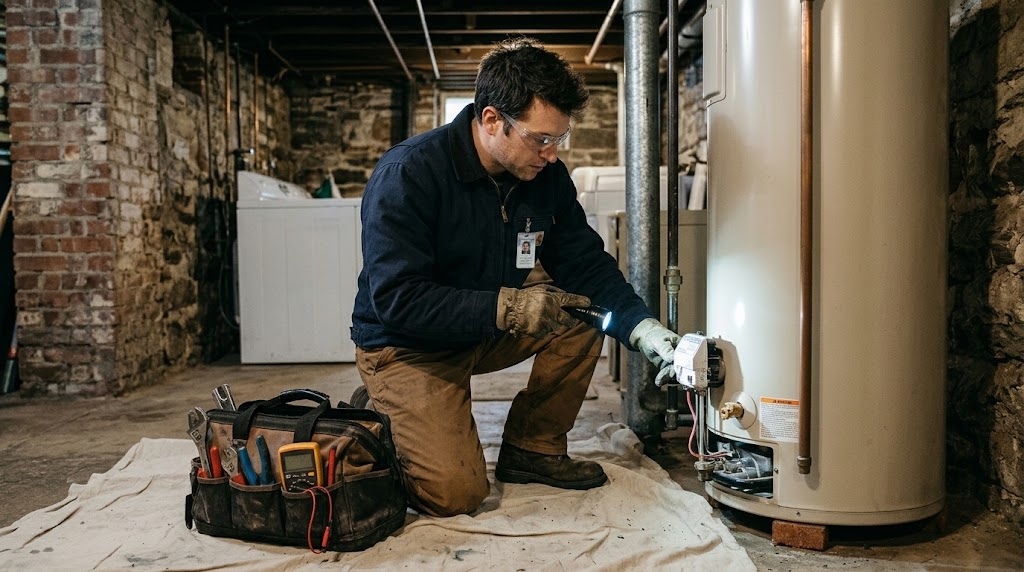
Precision Diagnostics for Domestic Hot Water
Losing hot water disrupts daily life instantly. Whether showering before work, washing dishes, or doing laundry, families in Gravesend depend on uninterrupted domestic hot water. Most homes throughout Gravesend, Avenue U, Kings Highway, and McDonald Avenue utilize gas-fired atmospheric water heaters, power-vented units, or modern tankless instantaneous systems connected to natural gas lines.
Hot water breakdowns often stem from minor control failures rather than catastrophic tank collapses. Electronic spark igniters, safety gas control valves, millivolt thermocouples, and thermopiles degrade over time due to basement humidity and dust. When these components fail, the burner cannot maintain an active flame.
Our technicians carry specialized testing equipment to measure thermocouple millivoltage, test gas pressure at the manifold, verify draft hood draw, and inspect temperature and pressure relief valves. We ensure your system operates safely without carbon monoxide spillage or overheating risks.
Critical Symptoms That Require Immediate Service
Contact our emergency plumbing hotline when you detect any of the following warning signs around your water heater:
- Water Puddling Beneath the Tank: Moisture pooling around the base requires immediate inspection to determine whether a drain valve, inlet pipe connection, or the inner steel tank has failed.
- Rusty or Discolored Water: Brown or yellowish hot water from your faucets suggests that the sacrificial anode rod inside the tank has completely dissolved, allowing corrosion to attack the steel shell.
- Rotten Egg or Sulfur Odor: Anaerobic bacteria reacting with magnesium anode rods can create foul hydrogen sulfide gas inside hot water pipes.
- Active T&P Relief Valve Discharge: Water discharging from the high-pressure relief pipe indicates unsafe overheating or excess line pressure, which may require an expansion tank or pressure regulator check.
- Loud Rumbling & Popping: Mineral calcification on the bottom of the tank creates hot spots that boil water violently beneath sediment layers.
Water Heater Technologies Serviced in Gravesend
Atmospheric Gas Tanks
Traditional chimney-vented tanks (40 to 75 gallon capacity). We service pilot assemblies, thermocouples, gas control valves, and dip tubes to restore dependable hot water.
Power-Vented Systems
Units equipped with motorized exhaust blowers venting through sidewalls. We troubleshoot pressure switches, exhaust blower motors, and electronic hot-surface igniters.
Tankless On-Demand Units
Compact wall-mounted high-efficiency heaters. We perform descaling flushes, flow sensor diagnostics, combustion intake clearing, and error code troubleshooting.
Frequently Asked Questions
Lukewarm water is commonly caused by an extinguished pilot light, a defective thermocouple failing to keep the gas valve open, a cracked plastic dip tube allowing cold water to mix directly with hot outflow, or thick mineral sediment insulating the tank bottom from the burner.
If water is dripping from threaded plumbing fittings, shutoff valves, or the Temperature and Pressure (T&P) relief valve, it can easily be repaired. However, if water is weeping from the bottom metal shell or seams of the tank body, the inner glass lining has ruptured and the entire water heater must be replaced.
Popping and rumbling sounds are caused by mineral scale buildup. Calcium deposits settle onto the tank bottom, trapping pockets of water beneath a hard crust. When the burner fires, this trapped water boils violently and pops through the sediment layer.
Flushing your water heater once every 12 months clears accumulated silt and mineral deposits, protects the sacrificial anode rod, and maintains peak heating efficiency.